Guide
French drain repair and maintenance
A French drain fails quietly. The trench is still there and the pipe is still in it, but the water has stopped moving. Finding out which part stopped is most of the repair.
Short answer: French drain repair starts with finding which part failed: the outlet, the pipe, the slope or the gravel. A blocked outlet or a clogged pipe can be cleared by flushing or jetting through a cleanout. A crushed section can be spliced. Gravel that has filled with silt cannot be cleaned and means rebuilding that length.
On this page
The French drain guide explains why these drains work: water moves into open stone, falls to a pipe, and runs downhill to an outlet. Every failure is one of those three steps stopping. This page covers how to tell which, what can be cleaned, what has to be dug up, and the routine that keeps a working drain working.
How French drains fail
Silt in the gravel
The most common slow failure. Fine soil washes into the trench and fills the voids between the stones. Flow drops year by year until the trench is a buried strip of muddy rock. The cause is always in the original build: no fabric, fabric around the pipe only, or stone that was delivered with fines in it. A sock on the pipe protects the pipe and leaves the gravel to silt up.
Silt and debris in the pipe
Sediment that gets past the stone settles in the pipe, fastest in low spots and in the ridges of corrugated pipe. Leaves and roof grit arrive if downspouts or open catch basins feed the line directly.
Roots
A perforated pipe full of water and air is exactly what tree and shrub roots look for. They enter through the perforations and joints and grow into a mat that catches everything else.
Crushed or separated pipe
Shallow pipe under a driveway edge, a parking strip or the path a delivery truck took can flatten. Corrugated pipe crushes more easily than rigid pipe. Joints can also pull apart when the trench settles, which lets soil pour in.
Blocked outlet
The easiest failure to fix and the easiest to miss. Turf grows over the pipe end, mulch buries it, an animal nests in it, or a mower crushes it. The drain upstream may be perfect and still hold water.
Lost slope
A drain needs continuous fall, at least 1 foot per 100 feet. Settlement creates a dip, called a belly, where water and sediment sit permanently. Some drains never had the slope to begin with. The depth and slope guide covers what the fall should be and how to measure it.
University of Minnesota Extension lists the same short set of causes for failed foundation drain systems: collapse of the pipe, clogging of the pipe with silt or tree roots, and a broken connection to the sump (Source: University of Minnesota Extension, Moisture in basements: causes and solutions).
Symptoms and what they point to
| Symptom | Likely cause | Fix |
|---|---|---|
| Yard wet again; nothing coming out of the outlet | Outlet buried, crushed or nested in | Find and clear the outlet; add a grate |
| Outlet trickles while the ground upstream is saturated | Pipe partly blocked with silt or roots | Flush or jet through a cleanout; camera to confirm |
| Hose water runs through the pipe freely but the yard stays wet | Gravel silted up; water cannot reach the pipe | Rebuild the affected length with fabric and clean stone |
| Water stands in the pipe or cleanout days after rain | Belly from settlement, or too little slope | Dig up and re-bed the low section; re-lay if the whole run is flat |
| Depression or small sinkhole along the trench line | Broken or separated pipe taking in soil | Excavate at the spot and splice in new pipe |
| Muddy water at the outlet | Soil entering through a break or missing fabric | Camera to locate; spot repair or rebuild |
| Wet strip downhill of one point only | Blockage or crushed pipe at that point | Camera, then spot repair |
| Basement wet again; sump pit dry during rain | Interior or footing drain blocked, or its connection to the sump broken | Flush from cleanouts; camera from the sump |
| Basement wet; sump pit full | Pump, float switch, power or discharge line failure, not the drain | Test and replace the pump; clear the discharge |
Before blaming the drain, check whether the water has changed. A new downspout, a neighbor's regrading or a patio that now sheds onto the lawn can overload a drain that is working exactly as built.
Diagnosing a clogged French drain
Work from the outlet back. Each step is cheaper than the next.
- Find the outlet. Walk the low end of the line. If nobody knows where it is, look for a pipe end on a bank, a pop-up emitter in the lawn, or a wet patch that marks a buried one. Clear it and see what comes out.
- Run a hose test. Put a garden hose into the cleanout at the high end, or into the highest inlet, and run it at full flow. Note how long water takes to appear at the outlet and whether the flow coming out matches the flow going in. Fast and full means the pipe is open. Slow, reduced or nothing means a restriction. Water backing up out of the cleanout means a blockage close by.
- Test the trench separately. If the pipe passes the hose test and the ground is still wet, the gravel is the suspect. Dig a small test hole at the edge of the trench in the wet area. Stone packed with mud confirms it.
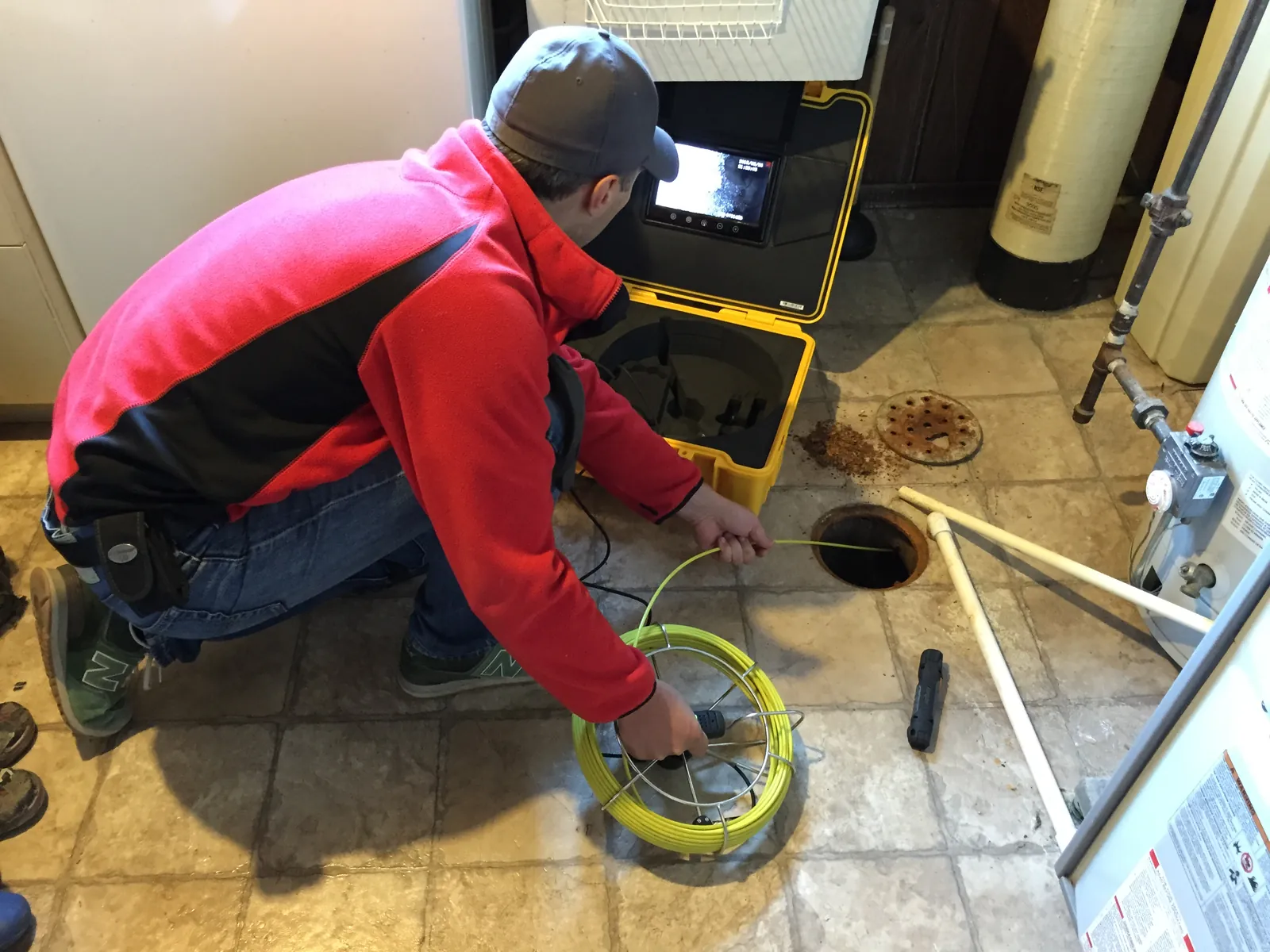
- Send a camera through. A drain camera pushed in from the outlet or a cleanout shows silt, roots, standing water in a belly, crushed pipe and separated joints, with a footage count to each. Many inspection cameras carry a locating transmitter, so the spot can be marked on the surface above. Plumbers and drain-cleaning firms do this as a routine call.
- Check the grade. If the camera shows standing water along long stretches, measure the fall between the high end and the outlet. A run with no fall cannot be cleaned into working.
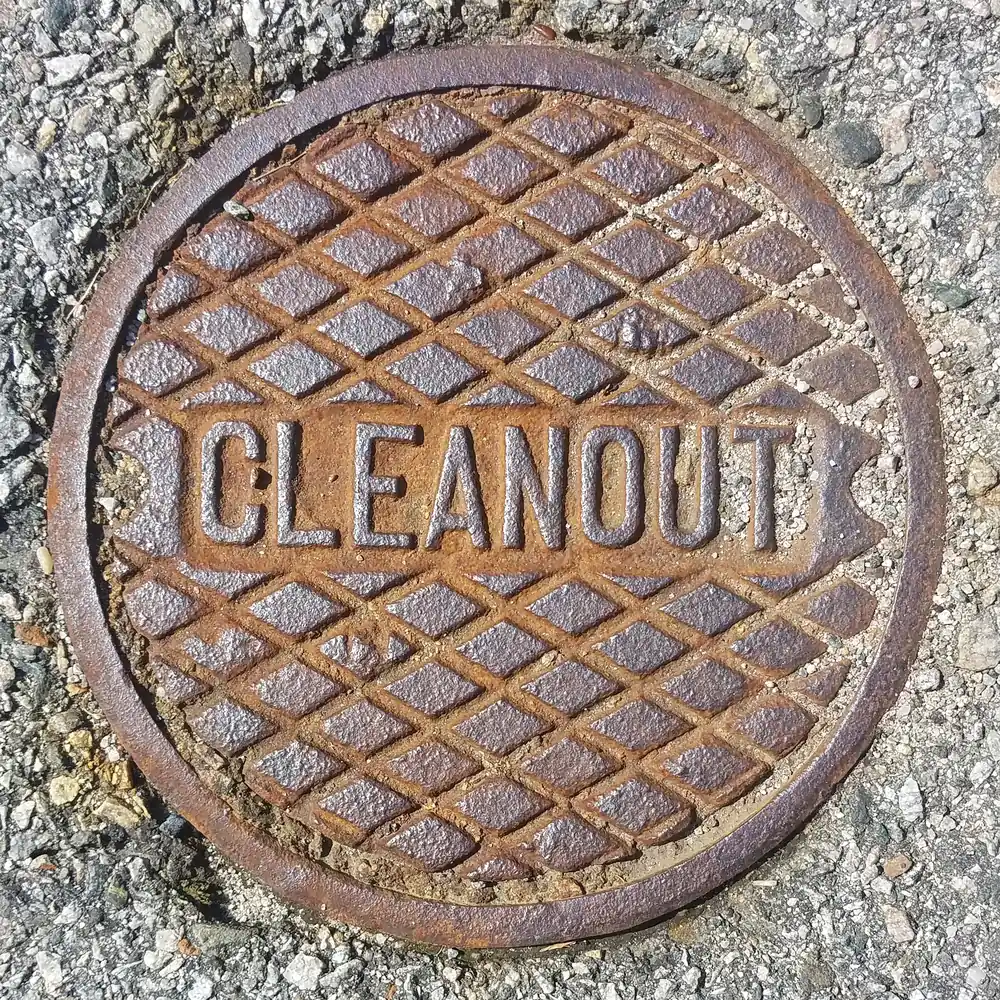
A drain with no cleanout can still be tested by exposing the pipe at its high end. Cut in a cleanout riser while the hole is open, so the next test takes five minutes.
French drain cleaning: flushing and jetting
French drain cleaning means cleaning the pipe. Nothing that goes down the pipe cleans the stone around it.
- Flushing. A garden hose at full flow through the high-end cleanout moves loose silt to the outlet. It is the annual-maintenance method and costs nothing. Run it until the water at the outlet clears.
- Jetting. A sewer jetter is a high-pressure hose with a nozzle that sprays backward, pulling itself up the pipe and washing debris back toward the operator. It is worked from the outlet or a low cleanout so the sediment comes out instead of being driven deeper. Jetting clears packed silt and fine roots.
- Cutting roots. Heavier roots need a mechanical cutter on a drain machine. This restores flow, and the roots return. If roots are the cause, plan on repeating it or on replacing that length with solid pipe.
- Vacuuming basins. Catch basins and sump pits are cleaned by hand or with a wet vacuum, not flushed into the pipe.
Pipe type decides how well this goes. Rigid pipe holds its line, has a smooth wall and takes a jetter or a snake. Corrugated pipe catches sediment in its ridges, and its thin wall can be torn by a cutter or an aggressive nozzle. On an old corrugated line, start gently and expect less.
Cleaning has a limit. If the pipe runs clear and the ground is still wet, stop paying for cleaning. The gravel has failed, and that is a rebuild.
Repair vs replace
The camera footage makes this decision. One fault in one place is a repair. The same fault along the whole run is a replacement.
Spot repairs are small excavations. A crushed or separated section is cut out and a new length spliced in with couplings, bedded in clean stone and re-wrapped in fabric. A belly is dug up and the pipe re-bedded to grade. A damaged outlet is rebuilt with a solid pipe end and a grate. A line that crosses under traffic is replaced with rigid pipe through that stretch.
Replacement is the answer when the stone is silted along its length, when there is no fabric, when the trench was never sloped, or when corrugated pipe has sagged throughout. The old trench line can usually be reused. Everything comes out, and the drain is rebuilt as in how to install a French drain.
Cleaning and spot repairs are priced by the visit and by what the camera finds, so get those quoted locally. Replacement is priced as new work: $18 to $40 per linear foot for a contractor-installed yard drain, $25 to $55 for a curtain drain, and $6 to $16 per foot in materials if you do a shallow run yourself. Use the French drain cost calculator for a length-based estimate, and request quotes on the French drain cost page if the job is beyond a weekend.
Footing-depth drains are a different calculation. Digging up a failed exterior drain costs what an exterior French drain around the foundation costs, which is why a failed footing drain is so often bypassed with an interior basement French drain instead.
Annual French drain maintenance checklist
French drain maintenance is mostly looking. Do it once a year, in dry weather before the wet season, and again after any storm large enough to flood the yard.
- Outlet. Find it, clear grass, leaves and mulch from around it, and check that the grate or guard is in place and the pipe end is not crushed.
- Discharge area. Make sure water leaving the outlet still has a downhill path and is not eroding a gully or ponding against a fence or a neighbor's lot.
- Cleanouts. Open each cap. Standing water in a cleanout in dry weather means a belly or a blockage downstream.
- Flush. Run a hose through the high-end cleanout for several minutes and watch the outlet. Note how long the water takes to arrive, and compare it with last year.
- Catch basins. Lift the grate and scoop out the sump. Stormwater practice is to clean a basin before its sump is half full of sediment (Source: Connecticut Stormwater Quality Manual, deep sump catch basins).
- Trench surface. Walk the line looking for depressions, sinkholes and wet strips. Where the stone comes to the surface, rake off leaves and soil so they do not seal it.
- Roots and traffic. Note any tree or large shrub that has grown close to the line, and keep vehicles off it.
- Dry wells. If the drain ends in one, check that it empties between storms. Pennsylvania's stormwater manual sets a maximum drain-down time of 72 hours and recommends inspecting dry wells four times a year and after every storm exceeding 1 inch (Source: Pennsylvania Stormwater Best Management Practices Manual, BMP 6.4.6).
- Sump systems. For interior drains, pour water into the pit until the pump starts, confirm the check valve holds, test the battery backup and the alarm, and check that the discharge line outside is clear.
How to design a French drain so it does not clog
Almost every failure above is decided on the day the trench is backfilled. If you are building new or rebuilding a failed length, these are the details that matter, and each is covered in the pipe, gravel and fabric guide.
- Fabric around the stone. Non-woven geotextile lining the trench and folded over the top of the gravel. This is the single detail that prevents the failure cleaning cannot fix.
- Washed stone. Clean, angular 3/4-inch stone with no fines. Order it as washed and look at the load before it is dumped. The French drain gravel calculator gives the quantity.
- Rigid pipe, holes down. It holds its slope, resists crushing and can be cleaned.
- Real slope. At least 1%, checked with a level before the stone goes in, with no dips.
- Cleanouts. A riser at the high end and at each change of direction. See the layouts in French drain diagrams.
- A protected outlet. A length of solid pipe at the end, a grate or guard against animals, and stone or a splash pad under it against erosion.
- Solid pipe past trees. Where the line must pass near a tree, use unperforated pipe with sealed joints through that stretch so roots have nothing to enter.
- Surface water kept separate. Downspouts and catch basins go to the outlet in their own solid pipe. The comparison in French drain vs dry well and catch basin shows how the pieces connect.
- Less water to begin with. Roof runoff that soaks into a rain garden never reaches the drain, and the drain lasts longer for it.
When to hand it to a contractor
Finding an outlet, flushing a line and cleaning a basin are homeowner jobs. Call a drain-cleaning firm for jetting and camera work; the equipment is specialized and the footage is worth having. Call a drainage contractor when the camera shows a rebuild, when the pipe is deeper than you can safely dig, or when the failed drain is the one at the footing and water is reaching the basement. For that last case, start with the foundation and basement water guide before agreeing to any scope.
Common questions
How do you know if a French drain is clogged?
The area it used to dry stays wet after rain, and little or nothing comes out of the outlet while the ground upstream is saturated. Other signs are water standing in a cleanout, a depression forming along the trench line, or a sump that has stopped receiving water. A hose test confirms it: run water in at the high end and time how long it takes to reach the outlet.
Can a French drain be cleaned out?
The pipe can. Flushing with a garden hose through a cleanout clears light silt, and a sewer jetter clears packed sediment and small roots. Rigid pipe with cleanouts cleans well. Corrugated pipe is harder to clean and easier to damage. The gravel around the pipe cannot be cleaned in place, so a drain whose stone has filled with silt has to be rebuilt.
How often should a French drain be cleaned?
There is no fixed interval. Inspect the outlet, cleanouts and any catch basins once a year and after major storms, and flush the pipe when the hose test shows flow slowing or silt appears at the outlet. A drain built with fabric around clean stone may go many years without needing more than an outlet check.
Is it better to repair or replace a French drain?
Repair when the fault is in one place: a blocked outlet, a crushed section, roots at one point. Replace when the fault runs the whole length: gravel filled with silt, no fabric, a trench without enough slope, or corrugated pipe that has sagged throughout. Replacement costs about what a new drain does, $18 to $40 per linear foot for a yard run.
Why is my French drain holding water?
Standing water in the pipe or trench means the water has no way out or no slope to follow. The usual causes are a blocked or buried outlet, a low spot where the pipe has settled, a trench built with too little fall, or an outlet that sits lower than the ground it empties onto. A camera inspection shows which one.