Calculator
River rock calculator
Enter the area and the depth to get cubic yards and tons of river rock. The weight is set for river rock and can be changed to match your supplier.
River rock calculator
| Quantity | Amount |
|---|
Volume is exact geometry. Weight depends on the density you enter, so treat tons as an ordering estimate and confirm with the supplier.
How to use the river rock calculator
Measure the bed in feet, choose its shape and enter the depth in inches. The calculator returns cubic feet, cubic yards, pounds and tons. For a winding bed or a dry creek, measure the length along the centerline and use the average width.
How much river rock do I need: the formula
- Area in square feet.
- Cubic feet: area times depth in inches, divided by 12.
- Cubic yards: cubic feet divided by 27.
- Tons: cubic yards times 2,600, divided by 2,000.
Worked example
A border 30 feet long and 4 feet wide, 3 inches deep. Area is 120 square feet and volume is 30 cubic feet, or 1.11 cubic yards. With 10 percent added, that is 33 cubic feet, 1.22 cubic yards. At 2,600 pounds per cubic yard it weighs 3,178 pounds: about 1.6 tons.
River rock coverage
| Depth | Cubic yards per 100 sq ft | Square feet one cubic yard covers |
|---|---|---|
| 2 in | 0.62 | 162 |
| 3 in | 0.93 | 108 |
| 4 in | 1.23 | 81 |
| 6 in | 1.85 | 54 |
| Depth | Square feet per ton |
|---|---|
| 2 in | 125 |
| 3 in | 83 |
| 4 in | 62 |
What river rock weighs
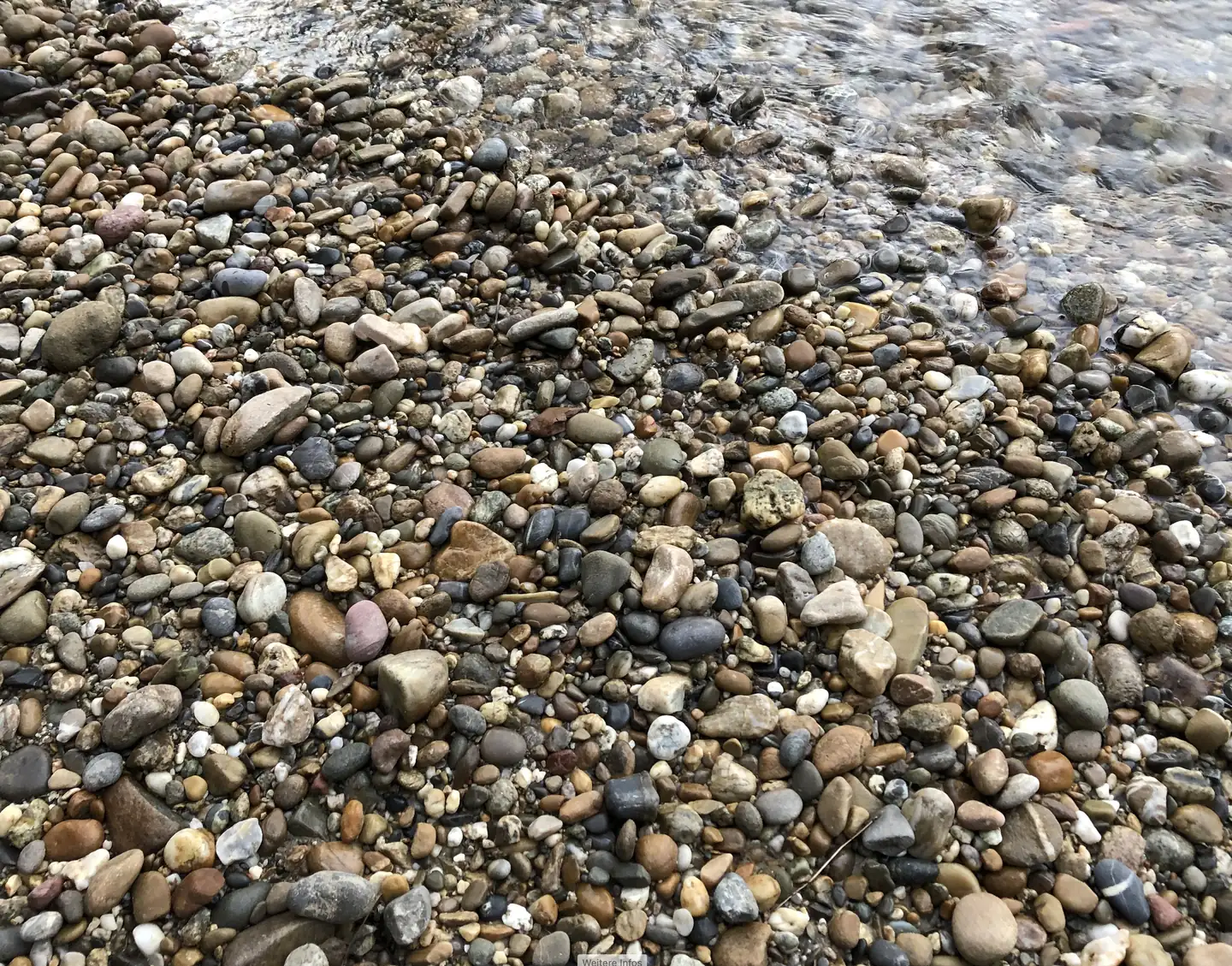
Suppliers commonly quote river rock at about 2,600 pounds per cubic yard, 1.3 tons. Rounded stones leave more air between them than crushed stone, which is why a cubic yard weighs a little less. The figure moves with stone size and moisture, so overwrite it if your yard gives you its own.
Size and depth
Depth follows stone size. The layer has to be deep enough for stones to overlap, or the fabric shows through; about twice the stone size does it. That means larger river rock takes far more material per square foot than small rock, and the per-ton coverage in the table drops accordingly.
River rock in drainage features
River rock is the standard finish for a dry creek bed or a swale, where it slows water and protects the soil as runoff crosses the yard. It is one of the surface options covered in the yard drainage solutions overview, alongside a French drain in a yard for water that sits below the surface and a rain garden for water that can be soaked in.
Where moving water has real force, on a stream bank or a shoreline, rounded river rock rolls. That job calls for angular quarried stone sized for the flow: see the riprap guide and the rip rap calculator. For other materials use the rock calculator or the pea gravel calculator; all tools are on the calculators page.
Common questions
How much river rock do I need?
Multiply the area in square feet by the depth in inches, divide by 12 for cubic feet, and divide by 27 for cubic yards. A bed 30 feet by 4 feet at 3 inches deep needs 30 cubic feet, which is 1.11 cubic yards, or about 1.4 tons at 2,600 pounds per cubic yard.
How much area does a ton of river rock cover?
At 2,600 pounds per cubic yard, a ton of river rock covers about 125 square feet at 2 inches deep, 83 square feet at 3 inches and 62 square feet at 4 inches. Larger stones need a deeper layer, so they cover less per ton.
How deep should river rock be?
Deep enough that the stones overlap and hide the fabric or soil below, which is about twice the size of the stone. One-inch rock is commonly laid 2 inches deep, and 2 to 3 inch rock 4 to 6 inches deep.
Can river rock be used for drainage?
River rock works well on the surface, such as lining a dry creek bed or swale that carries water across a yard. Inside a drain trench, washed angular stone is the more common choice around the pipe because it locks in place.